
India’s textile industry has always been more than just an economic sector—it is part of the nation’s identity. From hand-spun cotton that fueled independence movements to its current status as a global supplier of fabrics, Indian textiles have a legacy that spans centuries. Yet, while history often celebrates the artistry of handlooms and heritage weaving, the modern textile industry is equally defined by innovation, technology, and adaptation.
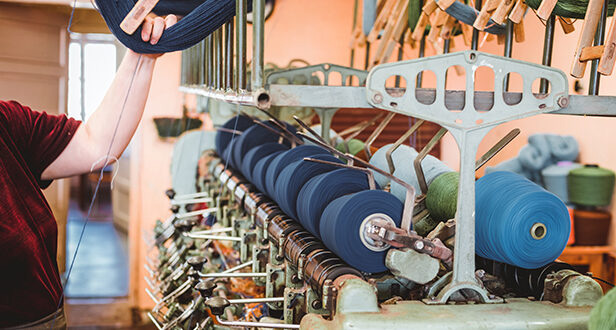
Over the past five decades, the industry has undergone a transformation. Mechanized weaving, improved spinning, and advanced dyeing processes have enabled India to compete on a global scale. Among these innovations, yarn dyeing emerged as a critical differentiator. Unlike bulk fabric dyeing, which prioritizes speed and cost, yarn dyeing focused on quality, design depth, and long-term durability. This shift mirrored the growing appetite for premium shirting and suiting fabrics both domestically and internationally.
Veteran companies that invested early in yarn dyeing and weaving technologies became central to this evolution. Their ability to combine traditional expertise with modern machinery allowed them to serve high-end fashion brands and global buyers. Over time, India not only became a hub for mass production but also carved a niche in quality-driven textiles.
The role of family-led businesses has been particularly significant. Many of these companies carried forward decades of knowledge, with second and third generations infusing new ideas while retaining core values. This continuity has helped balance heritage with progress. A company that started in the late 1970s with simple weaving units could, by the 2000s, transform into a sophisticated yarn dyeing and fabric manufacturing group catering to international markets.
Today, the Indian textile industry stands at a new crossroads. Sustainability, eco-friendly practices, and responsible manufacturing are reshaping the global fashion supply chain. Companies with 40–50 years of experience are uniquely positioned to lead this movement. Their deep understanding of yarns, dyes, and weaving allows them to innovate responsibly while maintaining consistency in quality.
The story of India’s textile industry, then, is one of resilience and reinvention. What began as a heritage rooted in cotton fields and handlooms has evolved into a modern, technology-driven ecosystem that serves the demands of global fashion. And at the heart of this journey are experienced companies whose decades of expertise continue to shape the future of fabrics.